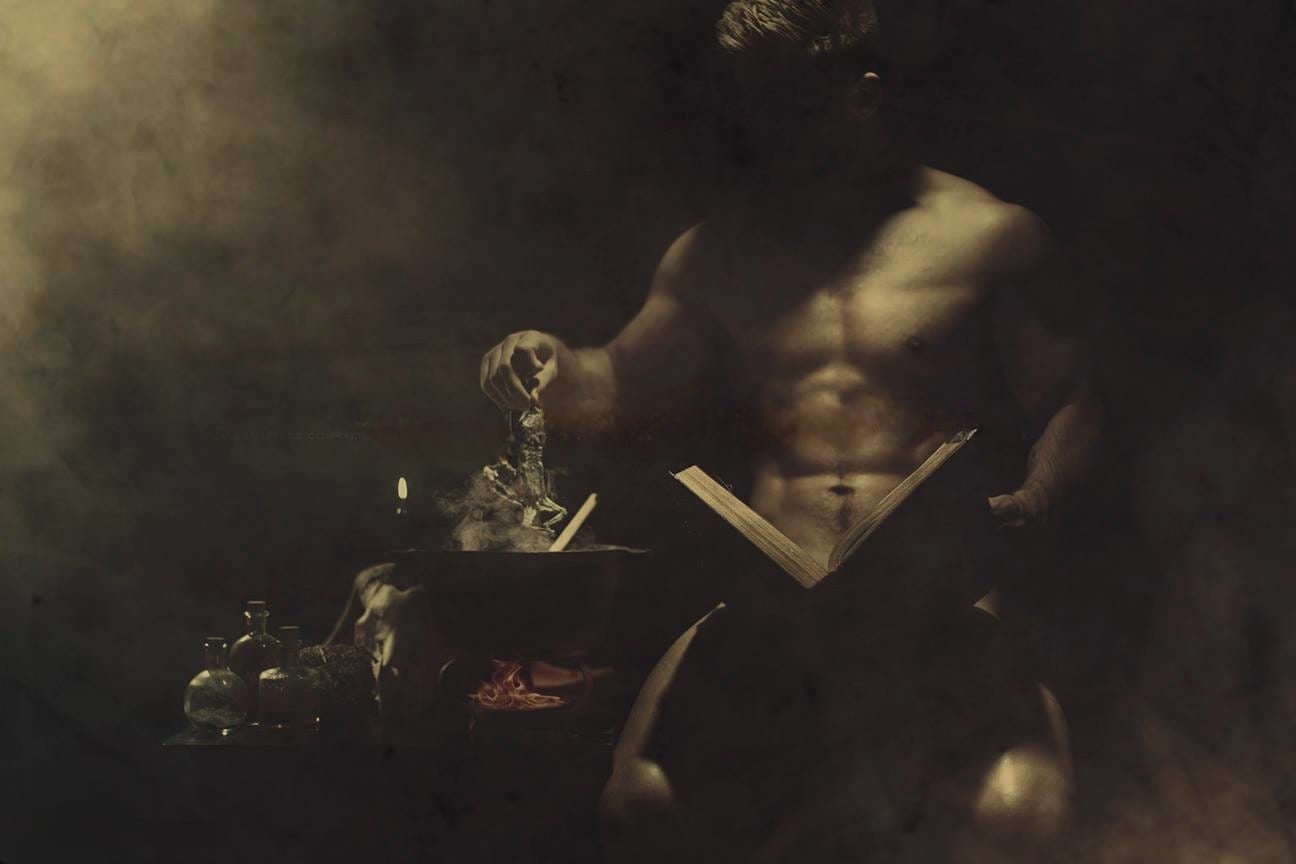
Warlock?
For most of my life, I have simply called myself a witch. Like many men within the Craft, I accepted that “witch” was the universal term. After all, the word has been reclaimed by generations of practitioners, and I have never believed that magic belongs to one gender. A witch is a witch. Yet over the years, I have begun to ask myself a different question.
If women can celebrate the uniquely feminine aspects of witchcraft, why should men not also be able to explore the uniquely masculine aspects of their own magical identity?
That question has led me to reconsider a word that many modern witches avoid: Warlock. Let’s dive in.
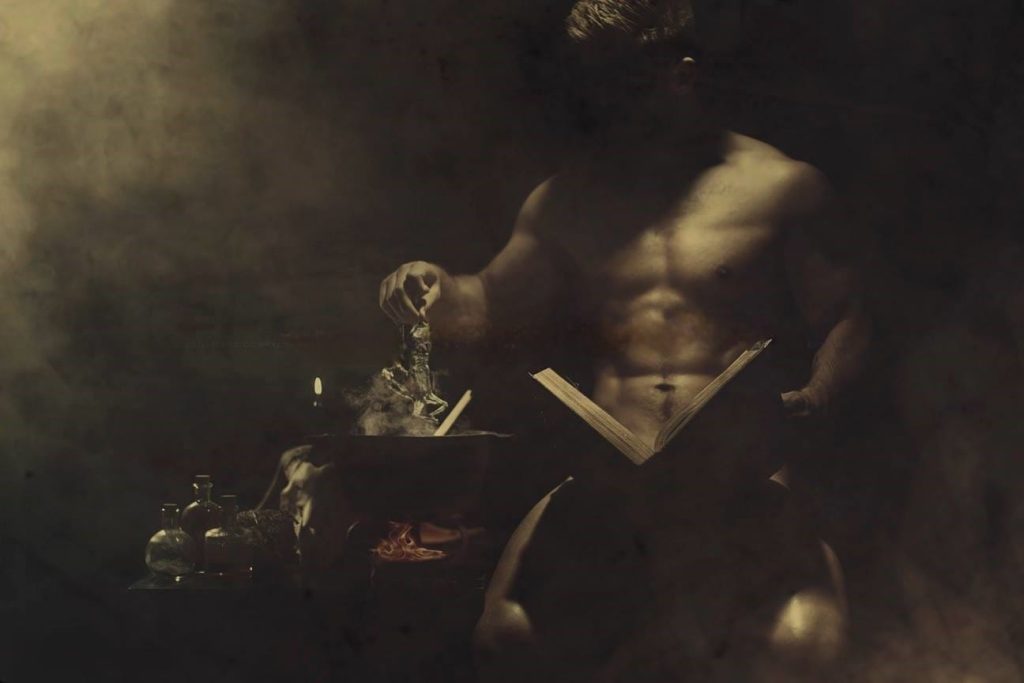
The Problem with the Word
Mention the word warlock in many Pagan circles and you will almost certainly hear the same response: “It means oath-breaker.” The argument often ends there, as though the discussion has been settled. But language is rarely that simple.
The word warlock does indeed derive from the Old English wǣrloga, meaning something akin to “oath-breaker,” “traitor,” or “deceiver.” Few historians dispute that origin.
What is often ignored is that words evolve. For around five hundred years, yes 500, particularly in Scotland, warlock has been used to describe a male practitioner of witchcraft. Modern English dictionaries still recognise this definition, and historical Scottish witch trial records frequently used the term when referring to accused male witches.
To insist that warlock can only ever mean “oath-breaker” because that was its earliest recorded meaning commits what linguists call the etymological fallacy, the mistaken belief that a word’s original meaning is its only legitimate meaning. If that were true, countless words in the English language would need to be abandoned.
“Nice” originally meant foolish or ignorant, but nobody argues that calling someone nice means they are foolish.
“Awful” originally meant inspiring awe, but today it usually means terrible.
Whose Oath?
There is another question worth asking. If warlock originally meant “oath-breaker,” whose oath was supposedly being broken?
The word’s association with witchcraft developed within a deeply Christian society, where those accused of witchcraft were often portrayed as having rejected the Church and entered into pacts with darkness. It’s reasonable to conclude that the oath-breaking was us breaking their faith, and to be frank if that’s correct then that’s a badge I happily wear with pride.
Whether or not that was the original intention behind the word can never be proven with certainty. However, if this was a label created and used by those persecuting witches, it is worth asking why modern witches continue repeating that accusation as though it is valid and must define us.
History is also filled with communities reclaiming words that were once used against them. The LGBTQ+ community is one example of this. Words that were once used as insults or weapons have been transformed into symbols of identity, pride, and belonging. Why should this be any different?
When the Craft Becomes a Closed Door
Over the last decade or so, there has been a growing conversation within parts of the Pagan community about identity, inclusion, and who gets to define what a witch is.
Witchcraft has always been a diverse and evolving path. It has welcomed people from many backgrounds, traditions, cultures and experiences. Yet alongside this beautiful diversity, there has also been a growing tendency in some spaces to define witchcraft in increasingly narrow terms.
Walk into many mainstream bookshops today and you will find shelves of books declaring things such as:
“A witch is a woman who…” or “A true witch knows she…”
Often these statements are written with positive intentions, celebrating feminine power, intuition and the experiences of women within witchcraft. Those experiences are valid and deserve to be honoured. However, when those definitions become the only accepted version of witchcraft, they can unintentionally send another message:
“You are not this, therefore this path is not for you.”
For many men seeking a place within the Craft, repeatedly seeing witchcraft described exclusively and only through female identity can create the feeling that they are visitors rather than participants and they are not welcome.
This then creates a strange contradiction. Some parts of the Pagan community express surprise that there are fewer men joining covens, circles, and groups. Yet at the same time some of the language used publicly presents witchcraft as something inherently female.
If we want a truly diverse Craft, we must consider both the doors we are opening and the doors we may unknowingly be closing. The answer is not to take anything away from our beautiful sisters, nor to deny the importance of feminine spirituality within witchcraft.
The answer is to recognise that there is room for more than one experience. A woman can be a witch. A man can be a witch. A non-binary person can be a witch. The Craft is not diminished when more people find their place within it. It is strengthened.
And perhaps this is why reclaiming words like Warlock matters. For some men, it is not about creating separation. It is about ensuring that their path is recognised as sacred too.
More Than a Name
For me, reclaiming Warlock is not about rejecting the word Witch. I will always be a witch. The word witch carries centuries of history, resilience, mystery, and power. It represents anyone who walks a path of magic, spirituality, personal growth and connection with nature and the unseen.
Witchcraft has never belonged to one gender, and I do not believe that it should. Nor is reclaiming the word Warlock about claiming superiority, creating division, or suggesting that men and women experience the Craft in opposing ways. Quite the opposite.
For me, Warlock is not a replacement for Witch. It is another expression of it. It is an opportunity to explore what healthy, sacred masculinity can look like within the Craft.
For generations, many societies have taught men a very narrow version of masculinity: that strength means control, that power means dominance, that emotions are weaknesses, and that vulnerability should be hidden.
The Craft teaches something different.
True power does not come from controlling others but from knowing and mastering oneself. A Warlock seeks wisdom before control, compassion before conquest, harmony before domination, courage without cruelty, strength that protects rather than intimidates and a connection to nature rather than a desire to conquer it.
The masculine within the Craft is not about being above the feminine or returning to shitty outdated ideas of hierarchy or superiority.
Sacred masculinity and sacred femininity are not opponents. They are complementary forces that exist within all of us. A Warlock to me represents a man who embraces the mysteries, seeks knowledge, honours intuition, develops emotional awareness, and understands that true strength is found through balance. It is a reclamation not only of a word but also an outward expression of the goal to be a better man.
Historically, the word Warlock was often used as a weapon. It was a label placed upon men who stepped outside accepted religious and social boundaries. It became associated with fear, suspicion, and accusation. The people who persecuted witches centuries ago do not get to decide what words we may use today. Their fears, their prejudices, and their interpretations do not own the language of our spirituality.
Judge Not the Path…
One of the teachings that forms the foundation of many, if not all, Pagan practices is a simple one:
“Judge not the path of your brother or sister, for their path is sacred.”
It reminds us that no two witches walk exactly the same road. We honour different Gods, work with different spirits, follow different traditions, and practise in different ways. Diversity has always been one of witchcraft’s greatest strengths.
Yet when it comes to the word Warlock, that spirit of acceptance can sometimes disappear.
I have met witches who embrace eclectic practice, reconstructionist traditions, ceremonial magic, folk witchcraft, hedge witchcraft, kitchen witchcraft, green witchcraft, and solitary practice. They celebrate the diversity of the Craft and understand that difference does not weaken it. But choose to call yourself a Warlock, and suddenly some feel entitled to tell you that you are wrong, that your chosen title is invalid, or even that you cannot truly be a witch.
Why?
If our paths are sacred, does that principle only apply when someone chooses a label we personally approve of?
I am not telling anyone to call themselves a Warlock. I am not asking that every male witch should reclaim the word. I am simply suggesting we get the same respect that we strive to give one another throughout the wider Pagan community:
All should have the freedom to define their own spiritual identity without judgement because if we truly believe each person’s path is sacred, surely that includes the names they choose to walk it by.
Why Not Simply Say “Male Witch”?
Many do. There is absolutely nothing wrong with that.
I often describe myself as a male witch because it immediately communicates what I practise. But sometimes clarity and identity are different things. A woman can rightly call herself both a woman and a witch. A man can rightly call himself both a man and a witch, and someone who is any other flavour of gender or non-gender can identify in whatever way makes their heart sing.
There is room within modern witchcraft for a distinctly masculine title if someone chooses it. Not because it is required or because it is more authentic. Simply because it resonates with them that should be reason enough.
What About “Mage”?
Others prefer Mage. It is a fine word, rich with history, and one I also appreciate. However, Mage has gradually become associated more with ceremonial magic, fantasy literature, or scholarly practitioners of magic rather than witchcraft itself. Warlock, by contrast, remains firmly rooted within the history of witchcraft, even if that history is complex.
A Personal Choice
I do not believe every man should call himself a Warlock.
Many never will. Many dislike the word, and I respect that completely.
Names have power because they are deeply personal, and no one should feel compelled to adopt a title that does not resonate with their own path.
For me, however, Warlock has become a symbol. Not of betrayal, but of freedom. Freedom from outdated expectations of masculinity. Freedom from labels imposed by persecutors centuries ago. Freedom to explore and embrace the masculine and feminine mysteries that exist within every witch.
Whether someone chooses to call themselves a Witch, a Male Witch, a Warlock, a Mage, or something else entirely is ultimately a personal choice. None of those paths diminish the others. In fact, they enrich the tapestry of our community.
The Craft has always been at its strongest when it welcomes diversity rather than fears it, when it celebrates individuality rather than conformity and when it encourages each of us to discover our own authentic path.
Perhaps it is time we lived those values more openly.
Let us celebrate the many ways people experience witchcraft.
Let us honour one another’s identities without feeling the need to correct or redefine them.
Let us walk our talk by embracing the richness, diversity, and individuality that have always been the heart of the Craft. After all, if we truly believe that every path is sacred, then every sincere seeker deserves the freedom to choose the name that best reflects the journey of their own sacred spirit.